Week Notes: Vol. 3 – № 10
Lessons learned organizing a local tech event
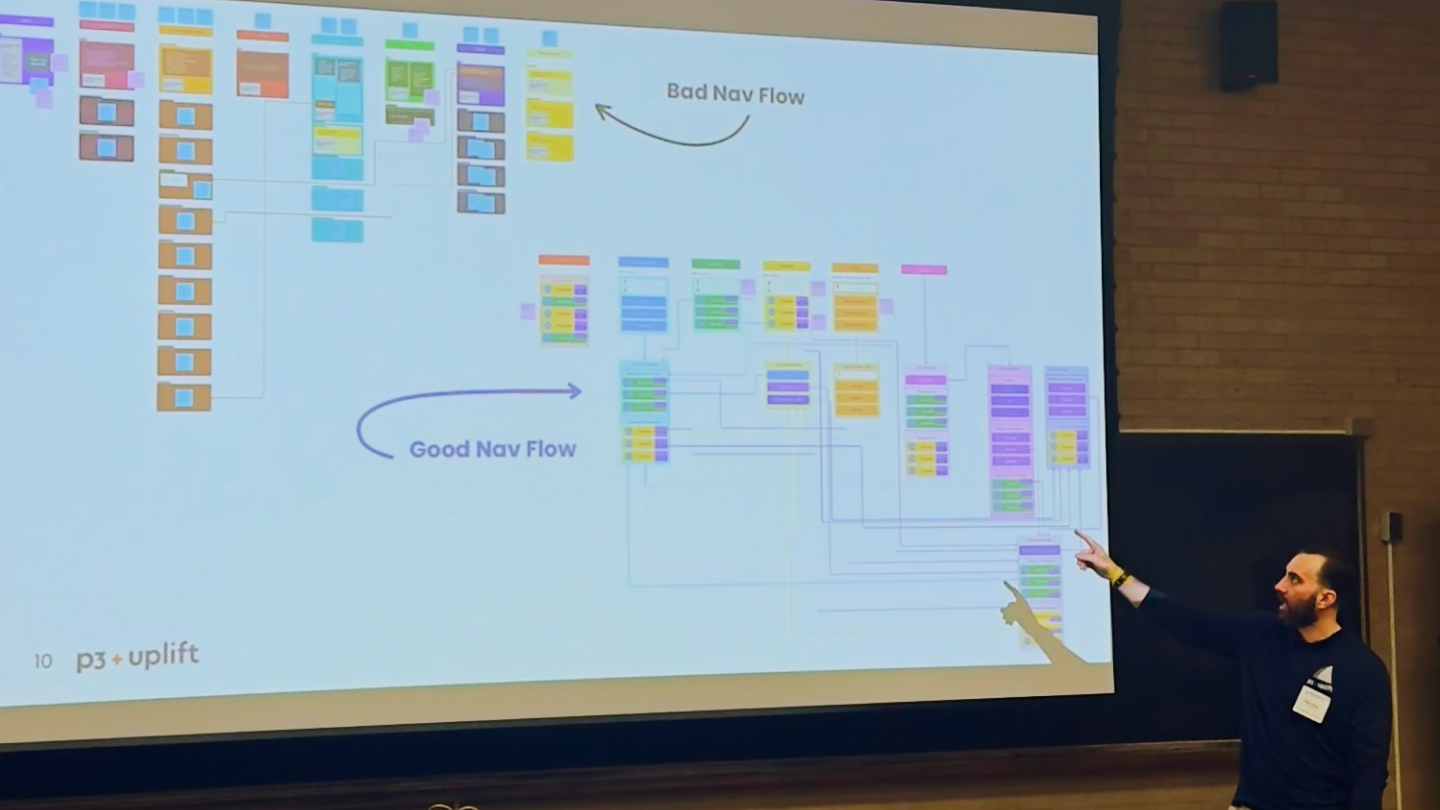
Thinking about organizing a local meetup or community event?
I helped organize World IA (Information Architecture) Day in Des Moines this year, and despite having run events in the past, I’d forgotten how many things can go sideways.
Like when you order enough pizza for 30 people and only 10 show up. Or discovering the event that we didn’t have WiFi.
To help my future self – and anyone planning a conference or large meetup – here are some issues we ran into and lessons we learned.
Hopefully, they help you sidestep potential problems, or at the very least, give you ideas.
Finding the right venue
We had a bit of a chicken-and-egg problem when it came to the venue and speakers. We weren’t sure whether we should pick a venue first or focus on recruiting speakers.
Do we find a venue first or should we put a call out for speakers so we have a better idea of what kind of venue we need? Will we need sponsors? That might depend on the venue. What about food?
We also didn’t feel like we could confidently announce and promote the event without including where it would take place.
Since a venue would help us make better choices and narrow our options, finding one quickly turned into our top priority.
In retrospect, we probably could have decided this earlier.
But securing a venue actually took a lot more effort, time, and thought than we anticipated.
After brainstorming more than a dozen locations, we hit some snags once we contacted our top choices. Cost aside, some weren’t open on weekends and some were private venues. Construction near one severely limited parking.
These challenges forced us to clarify what we wanted most for the event.
Note: Several Des Moines corporations have fantastic, modern facilities for their internal events. Most can be used for free if you know someone at the company who can reserve the space and serve as a sponsor.
Connecting with these people proved to be a huge hurdle, and we never got traction.
So if you’re someone at a big company with a nice meeting area, consider making it easy for community groups to get in contact with someone to use the space.
Fortunately, our friends at Drake University connected us with the right people.
Even that was a bit tricky. One campus group had a formal process and wanted us to purchase private event insurance. Whereas another group was more relaxed.
The lesson: Be prepared to spend more time than you think securing a venue and exploring your options if you don’t already have a space to use.
Building the speaker lineup
Finding speakers was surprisingly difficult.
Maybe it was awareness. Maybe it was timing. Maybe people are just more protective of their time after the pandemic.
We didn’t leave ourselves much room (roughly 6 weeks) in between booking the venue and hosting the event.
We went from thinking about how we might need breakout rooms to accommodate multiple sessions happening at the same time to thinking, “gosh, hopefully we have enough speakers to fill time!”
Almost 3 weeks before the event, I realized we hadn't locked in our speakers or officially announced a lineup.
My co-organizer and I had both presented at events, so we knew we could fill in any holes. But if it wasn’t for our network, our speaker list would have been thin. So I’m grateful to everyone who agreed to present and may have been on the fence at first.
Pro tip: Don't just rely on a public call for speakers – especially if this is a new event. Reach out to people you know who have spoken before or are interested in speaking for the first time.
Depending on your event, you can also ask people to demo their product. Presenting at a local event is essentially free publicity.
Also, don’t forget to let your speakers know some basic things, like where to park, how much time you're allotting for presentation, and what time they’re speaking. You know, important things!
The lesson: Making a decision is only part of the work. You still need to communicate it. Don’t forget to communicate outward as much as you are communicating internally.
Spreading the word
Maybe promotion would have been easier if World IA Day in Des Moines was more of a regular occurrence. But this was the first event since 2023.
There was hardly any built-in awareness. It felt like starting from scratch. Getting the word out was a bit of a challenge.
We first announced the return of World IA Day to the biggest relevant audience we knew: the Slack workspace for our local UX group.
That sparked a fire but activity there has been minimal for years so we knew we needed to get the message in front of more eyeballs.
I also posted in a Slack space for local web developers and front end- focused engineers, as well as on LinkedIn where I am most active.
Eventbrite helped some, but our strategy was still piecemeal.
We also submitted the event to public calendars for the city, nearby colleges, and tech organizations.
My co-organizer wanted to try social media marketing but we never got around to setting it up.
The lesson: Promoting anything on nights and weekends sounds easily doable. But it takes intentional planning and persistence.
Consider all the places your audience might be online. Don't expect for the message to land immediately after the first announcement.
Organizing a community event is messy. Things will take longer than expected, your attendance numbers will be lower than you expect, and you'll make decisions with incomplete information.
But it’s also incredibly rewarding. Seeing people connect, share ideas, and learn from each other makes the chaos worth it.